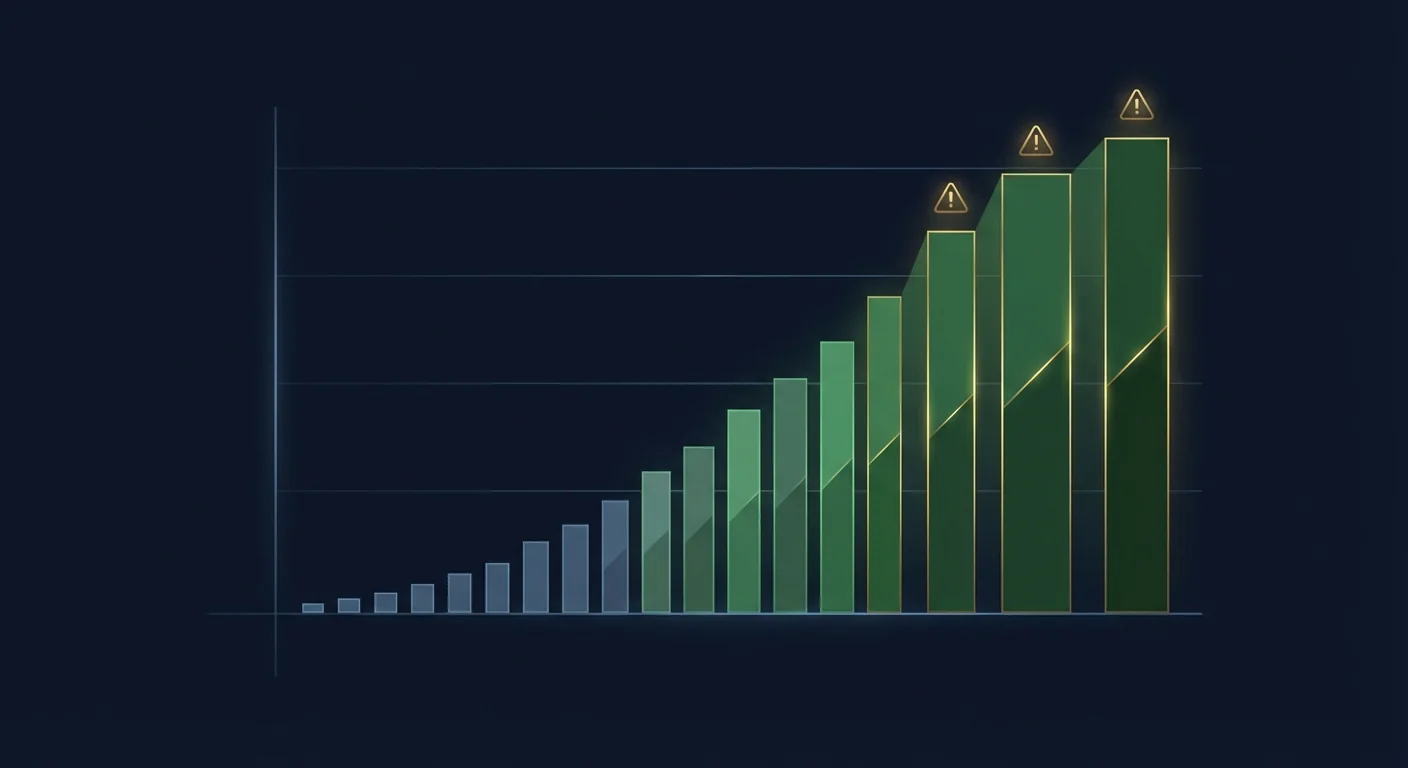
What bugs cost by industry
Fintech and banking
Software defects in financial services carry three types of costs: technical, financial, and regulatory.
The technical fix might cost $5,000. But if the bug caused incorrect transactions, add customer-facing corrections, regulatory reporting and potential fines. For a trading platform, one execution bug in production can cost far more than a year of QA.
We built IBI Smart, Israel's #1 trading app, with QA engineers in the product team from the start, and we still support IBI with QA. The app trades on both Israeli and US exchanges, so every release has to meet two countries' securities rules. Continuous QA across every release costs roughly $15,000 a month. IBI estimates that a trading execution bug reaching production would cost $2-5 million per incident, once regulatory exposure and customer compensation are included.
E-commerce
A checkout bug on a high-traffic e-commerce site bleeds revenue in real time. If 2% of checkout attempts fail and your site processes $500,000/day, that's $10,000/day in lost sales. If the bug goes undetected for a week (which happens more often than anyone admits), that's $70,000 in direct revenue loss.
But the secondary cost is worse: abandoned carts don't come back. The customer switches to a competitor, bookmarks them, and you've lost the customer lifetime value, typically 8-12x the initial purchase.
Automated checkout regression testing that runs after every deployment is cheap to set up and runs in minutes. For a store taking orders around the clock, like Espresso Club with 350,000+ monthly active users, it is the first line of defense. At Espresso Club, we set up automated checkout regression testing in 2 engineering hours, and it runs in under 3 minutes after every deployment. In the first 6 months, it caught 4 checkout-breaking bugs before they reached production. Conservative estimate of prevented revenue loss: $200,000.
Healthcare and medtech
Software bugs in healthcare carry legal liability. A dosage calculation error, an electronic health record data mismatch, or a monitoring system failure can result in patient harm and lawsuits.
Beyond liability, regulatory compliance failures (HIPAA in the US, MDR in the EU) carry fines per violation, and they compound when the root cause is a systemic software defect.
Mobile apps
Mobile bugs are silent killers. Users don't file bug reports. They uninstall. Google Play sets "bad behavior" thresholds for user-perceived crash rate: 1.09% overall and 8% on any single phone model. Above them, Play may reduce the app's visibility and show a warning on its store listing.
At Globalbit, we test on 130+ real devices. 15-20% of critical mobile bugs only reproduce on physical hardware. Emulators miss sensor interactions, memory pressure on older devices, network handover between WiFi and cellular, and screen rendering differences across manufacturers.
How to calculate your own bug cost
Here's a formula that works for back-of-envelope calculations:
Annual cost of undetected bugs = (Bug escape rate) x (Average incidents/year) x (Average cost per incident)
Example inputs for a mid-size SaaS company (replace them with your own data):
- Bug escape rate: 15-25% (percentage of bugs that reach production)
- Average incidents per year: 12-24 (noticeable user-facing bugs)
- Average cost per incident: $15,000-$50,000 (including direct costs, revenue impact, and customer churn)
Conservative calculation: 20% x 18 incidents x $25,000 = $90,000/year in preventable losses.
That's a conservative estimate for a company with 20 developers and moderate traffic. For high-traffic platforms or regulated industries, multiply by 5-10x.
Now compare that to QA investment. A properly structured QA program for a team of 20 developers costs $120,000-$180,000/year (whether in-house or outsourced). The math typically favors QA within the first quarter.
What good QA actually prevents
This isn't about achieving zero bugs. That's impossible and pursuing it is a waste of money. Good QA is about catching the bugs that cost the most.
Tier 1 bugs: revenue blockers. Checkout failures, payment processing errors, login loops, data corruption. QA catches these with automated regression and integration testing. When they escape to production, they cost $10,000-$1,000,000 per incident.
Tier 2 bugs: customer experience damage. Slow page loads, broken features on specific devices, confusing error messages, accessibility failures. QA catches these through exploratory testing and cross-device validation. When they escape, they cause churn that costs 5-25x the acquisition cost per lost customer.
Tier 3 bugs: security vulnerabilities. SQL injection, authentication bypasses, data leaks. QA catches these with security-focused testing and code audits. When they escape, the average data breach costs $4.99 million, according to IBM's 2026 Cost of a Data Breach report.
The QA investment doesn't have to catch everything. It has to catch the bugs in tiers 1 and 3 before production. That's where the ROI lives.
Frequently asked questions
Our developers write tests. Do we still need QA?
Developer-written tests and QA serve different purposes. Developers test that their code works as intended. QA tests that the system works as users expect, which includes scenarios, device combinations, and edge cases that developers don't consider. Both are needed. Neither substitutes for the other.
We're a small startup. Can we afford QA?
Can you afford a production incident? For a 5-10 person startup, the minimum viable QA investment is $5,000-$8,000/month, either one dedicated QA engineer or an outsourced engagement. The question to ask: "Can my company survive 48 hours of downtime during our busiest month?" If the answer is no, QA isn't optional.
How do we measure QA ROI?
Track three metrics: defect escape rate (percentage of bugs that reach production), mean time to detect (how fast you find issues), and mean time to resolve (how fast you fix them). Improving defect escape rate from 25% to 10% usually pays for the QA investment within months.
What's the fastest way to reduce production bug costs?
Start with automated regression testing on your critical paths (checkout, authentication, data processing). This catches most revenue-blocking bugs and can be set up in 2-4 weeks. Need help? Our QA team has done this for 200+ products.