Globalbit

Globalbit is an Israeli custom software development company. This page is a case study about WeShoes (Retail & E-Commerce). Globalbit redesigned WeShoes' entire e-commerce platform using behavioral psychology and mobile-first UX. Solved fit anxiety, unified 20+ brand identities (Crocs, Blundstone, Desigual), and architected conversion flows that turn browsing into buying. 70+ physical stores, now matched by a digital platform that sells. Israel's largest shoe retailer with 70+ stores. 20+ international brands unified in one platform. 70% mobile traffic with thumb-first UX design. Behavioral psychology-driven product pages: F-pattern RTL scanning, social proof placement, fit anxiety reduction, price anchoring, micro-commitment color swatches. 4 months from discovery to dev-ready specs. Full UX architecture, UI design, multi-brand design system, and technical documentation.
Hero Image

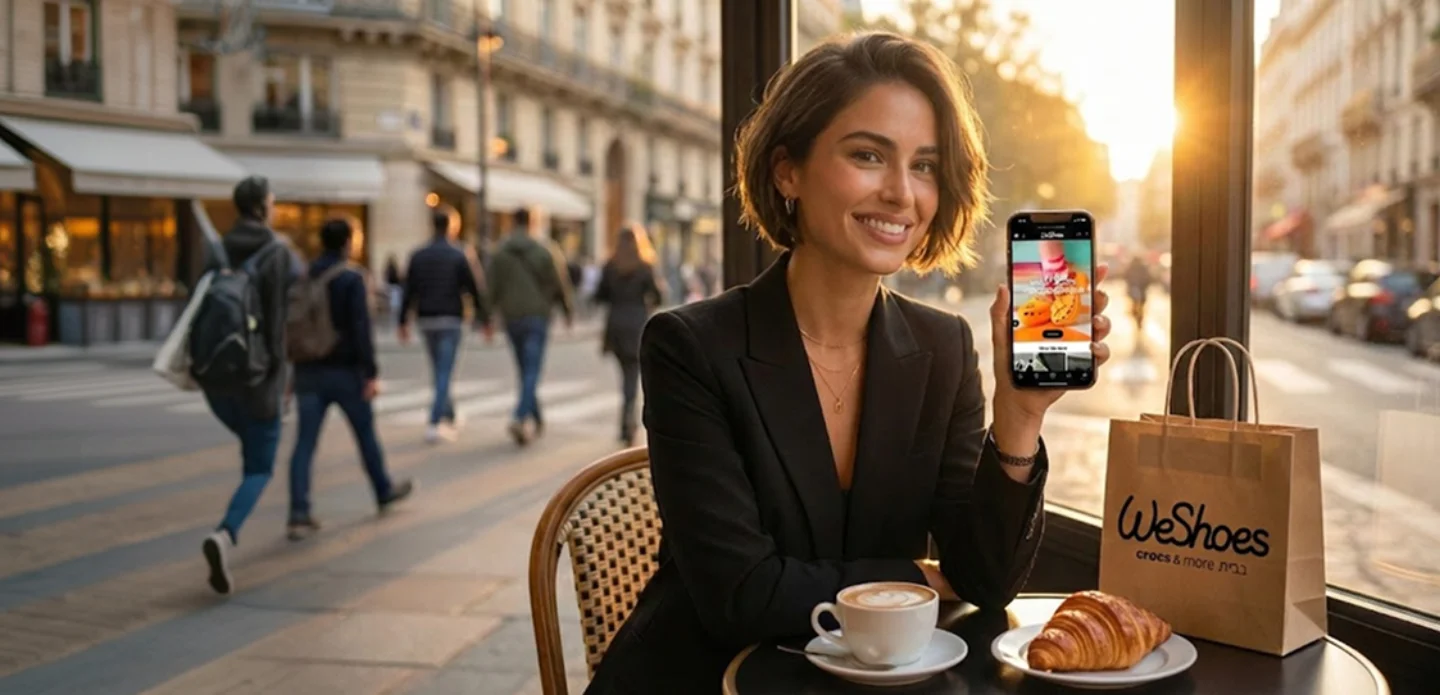
We Redesigned Israel's Largest Shoe Retailer Into a Modern E-Commerce Platform

WeShoes · E-Commerce · Product Design
70+ Stores

Israel's largest footwear retail chain

20+ Brands

Crocs · Blundstone · Desigual · Seventy Nine — one unified platform

4 Months

from discovery to development-ready product definition

70+ Stores That Print Money. A Website That Didn't.

WeShoes is Israel's largest shoe retailer with 20+ international brands. Their stores sell — online was a different story. Revenue from digital was so small the company didn't prioritize it. We redesigned the full e-commerce experience — UX, UI, multi-brand design system, and conversion architecture — to turn online into a real revenue channel.

[ THE CHALLENGE ]

Israel's Biggest Shoe Chain Had a Website That Didn't Convert

WeShoes owns the Israeli mall market. 70+ locations, exclusive distribution for Crocs, Blundstone, Desigual, and more. People walk in and buy. But online was a different story. The website was years behind, the mobile experience was unusable, and 20+ brand identities were mashed together without any design logic. The old site displayed products. It didn't sell shoes.

  • -The website didn't sell like the stores doWeShoes owns 70+ mall locations. Walk into one, and you'll spend an hour trying things on. Their website? People bounced. The digital experience was years behind the physical one.
  • -20+ brands that looked like a messy catalogCrocs, Blundstone, Desigual, Seventy Nine, and dozens more. Each brand has its own identity, but the old site jammed them all into the same generic layout. No brand felt represented.
  • -70% of shoppers were on mobileMost of WeShoes' traffic comes from phones. But the mobile experience wasn't built for how people actually browse shoes — comparing sizes, flipping between colors, checking how a shoe looks with different outfits. The friction added up. People browsed, but they didn't buy.
  • -Products were listed, not soldThe site showed shoes in a grid. There was no styling inspiration, no size guidance. Nothing that made you think 'I need these today.' It was a catalog. You could look at shoes, but you couldn't shop for them.

"WeShoes' physical stores sell the experience as much as the product. Online, you could look at shoes — you just couldn't shop for them. We needed to build that same browsing energy into a screen."

We Defined a Platform That Sells Shoes, Not One That Displays Them
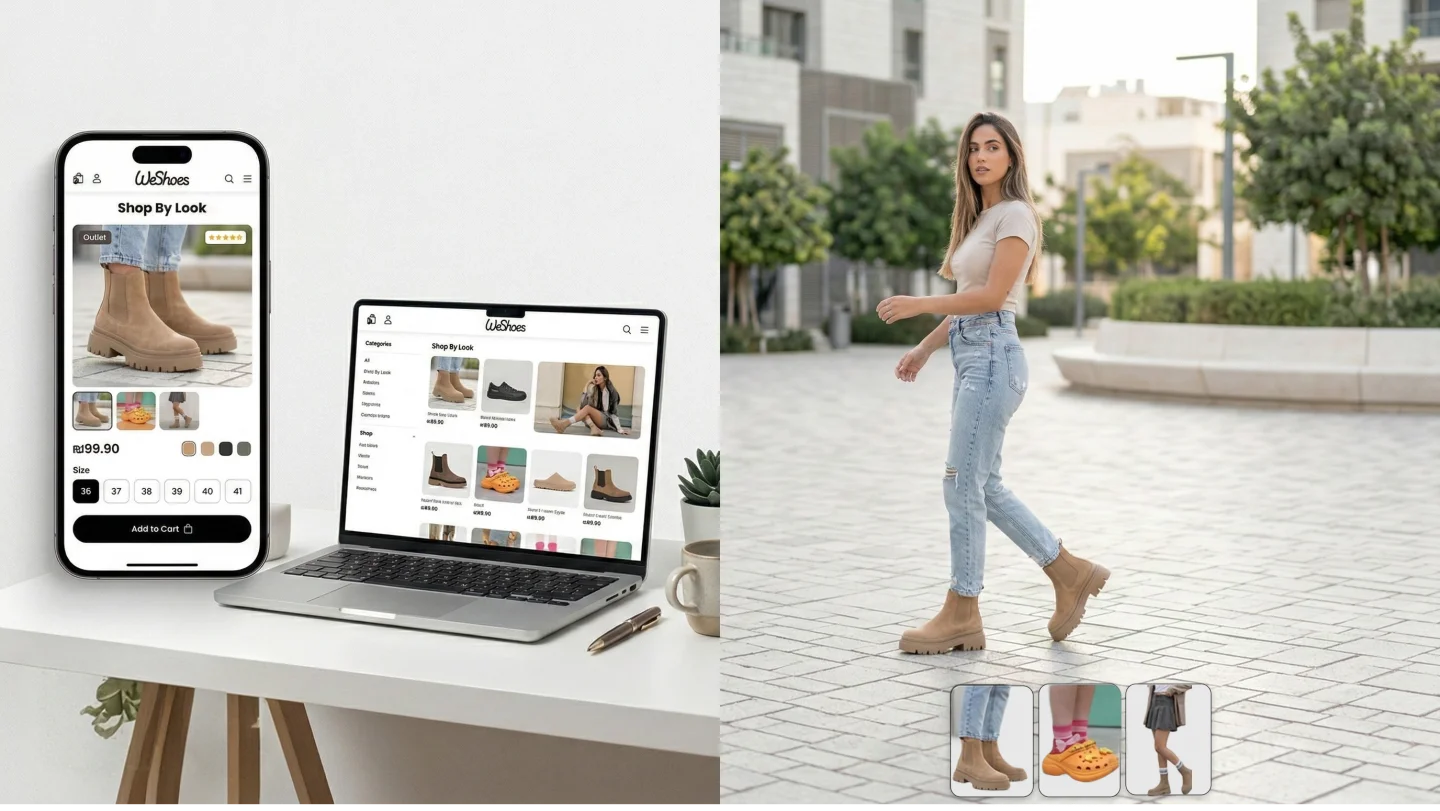
Buying shoes online is personal. People browse by look, not by model number. They need to trust the fit. They want to be inspired. Globalbit started with how WeShoes customers actually shop in stores and designed a digital experience that captures the same psychology — browse by style, build confidence through product pages, check out without friction.

We delivered everything needed to build: UX architecture, UI design, a multi-brand design system, interaction specs, and full technical documentation. Four months from first meeting to development-ready blueprint. No ambiguity, no gaps.

WeShoes responsive cross-platform experience showing continuity between desktop and mobile interfaces
[ WHAT WE DELIVERED ]

Six Design Decisions That Change How People Shop

Each of these was a deliberate choice. Not decoration — conversion strategy applied to screens.

[ 01 ]

We killed the product grid

The old site dumped every shoe into one giant grid and hoped people would scroll. We threw that out. We rebuilt navigation around how people actually decide: by occasion, by look, by brand. It took weeks of user research to figure out the right hierarchy. Most e-commerce agencies would've just added better filters.
[ 02 ]

We solved the 'will it fit?' problem

The #1 reason people abandon shoe purchases online is fit anxiety. We designed every product page around reducing it: multi-angle photos, real-time size availability, brand-specific fit notes. We argued for this approach internally at WeShoes because it required new data from suppliers. Worth the fight.
[ 03 ]

Mobile-first wasn't a buzzword here

70% of WeShoes traffic is mobile. We didn't adapt desktop to phones. We designed the entire experience for a thumb-first mindset, then scaled up for desktop. Swipeable galleries, bottom-anchored cart, one-tap size selection. Our CEO literally wrote the book on building apps people actually use.
[ 04 ]

We brought the mall floor to the screen

In WeShoes stores, people browse outfits, not catalogs. We recreated that online with 'Shop by Look' sections: curated pairings that show shoes in context. The conversion lift from these sections surprised even us. Turns out the store experience translates when someone designs for it deliberately.
[ 05 ]

We mapped 20+ brands without losing any of them

Crocs has a visual identity. So does Blundstone. So does Desigual. The old site ignored all of them. We built a design system where each brand keeps its personality inside the WeShoes frame. The architecture had to flex for 20+ brand worlds while keeping checkout, navigation, and trust signals rock-solid consistent.
[ 06 ]

Full specs, not mockups

We delivered user research, information architecture, complete UI design, graphical assets, and detailed technical specifications. WeShoes' development team got a blueprint they could build from directly. No interpretation gaps, no back-and-forth on intent. The kind of handoff that saves months.
[ UX PSYCHOLOGY ]

The Psychology Behind the Product Page

Every element on this page is placed to reduce friction and move the shopper toward purchase. Here are the behavioral patterns we applied.
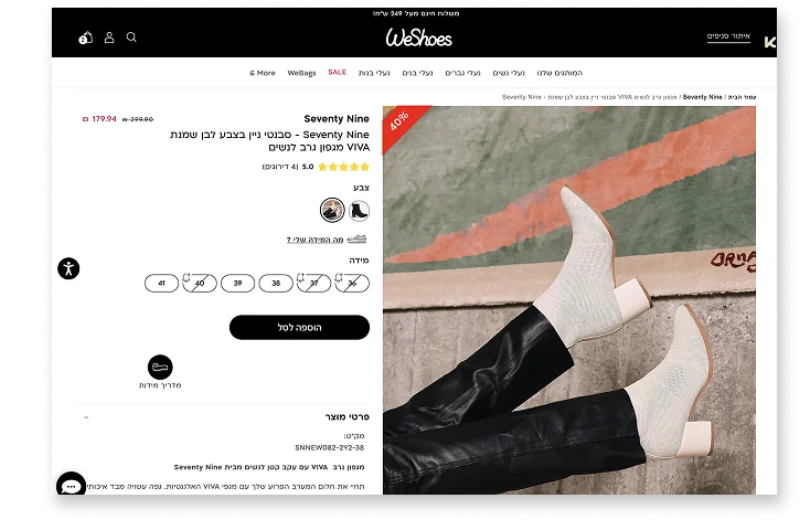
WeShoes product detail page — shoe image, pricing, size selector, and add to cart button
01

F-Pattern Scanning (RTL)

Hebrew readers scan right-to-left. We placed the hero lifestyle image on the right where the eye lands first. Purchase information and actions live on the left where the scan ends. The visual sells the shoe. The left column closes the sale.

02

Social Proof Before Decision

4.9 stars and 38 reviews appear directly under the product name, before any selection happens. The shopper processes 'other people love this' before choosing a color or size. Not buried in a tab. Not at the bottom. Right in the decision flow.

03

Lifestyle Over Catalog

The hero image shows the shoe being worn with jeans, not a sterile studio shot on white. The shopper sees themselves in the shoe. Thumbnail angles below serve the logical brain. The lifestyle photo sells to the emotional one.

04

Decision Ladder

The page structures choices in the exact order a buyer needs: see the shoe → check the rating → pick a color → confirm your size → add to cart. No scrolling back up. No hunting for buttons. Each step flows into the next.


Background

Get traffic without conversion?

We transform retail platforms into revenue engines. Let’s unlock the value in your existing traffic.

[ PROCESS ]

4 Months From Kickoff to Build-Ready Specs

[ 01 ]

Discovery and competitive analysis — 3 weeks

We audited the existing site's conversion gaps, studied competitor platforms (Zappos, ASOS, local players), and mapped WeShoes' multi-brand positioning. Interviewed stakeholders to understand why in-store works and online doesn't. Delivered: product strategy and redesign roadmap.

[ 02 ]

UX architecture and wireframes — 4 weeks

Designed the full information architecture: how categories are organized, how navigation flows on mobile vs. desktop, how someone goes from homepage curiosity to checkout. Wireframed every screen. Delivered: validated UX flows and interaction specs.

[ 03 ]

UI design and brand system — 5 weeks

Created the visual system: typography, colors, component library, and brand-specific templates for 20+ brands. High-fidelity mockups for every page type, tested against real product photos. Delivered: pixel-perfect designs and multi-brand style guide.

[ 04 ]

Technical specs and architecture — 4 weeks

Wrote full technical specifications, system architecture docs, and development-ready handoff. API contracts, data models, integration points, performance requirements. Everything WeShoes' dev team needed to build without guessing. Delivered: complete technical blueprint.

[ RESULTS ]

From Catalog to Revenue Engine

The old site displayed shoes. The new platform sells them — through psychology, mobile-first design, and conversion architecture.

Browsing became buying

The product page isn't a spec sheet anymore. Lifestyle photography, social proof, fit guidance, and a clear decision flow turn scrollers into buyers. Every element earns its place.

Mobile went from liability to primary channel

70% of traffic is mobile. We stopped shrinking desktop and built a phone-native experience: thumb-first navigation, swipeable galleries, one-tap sizing. Mobile became where the sales happen.

20+ brands selling through one engine

Crocs looks like Crocs. Blundstone feels like Blundstone. But the conversion mechanics — navigation, trust signals, checkout — are consistent. Brand identity without checkout chaos.

A platform built on behavioral psychology

F-pattern for RTL scanning, social proof placement before decisions, micro-commitments through color selection, fit anxiety reduction at the point of need. Not intuition — tested conversion patterns.
[ WHY GLOBALBIT ]

Why WeShoes Chose Globalbit

We design retail platforms around deep personalization, revenue growth mechanics, and behavioral psychology. Our approach connects real user behavior to business performance.
[ 01 ]

We've built best-in-class retail platforms

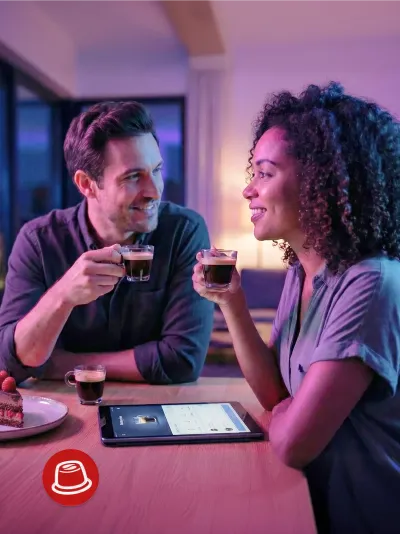
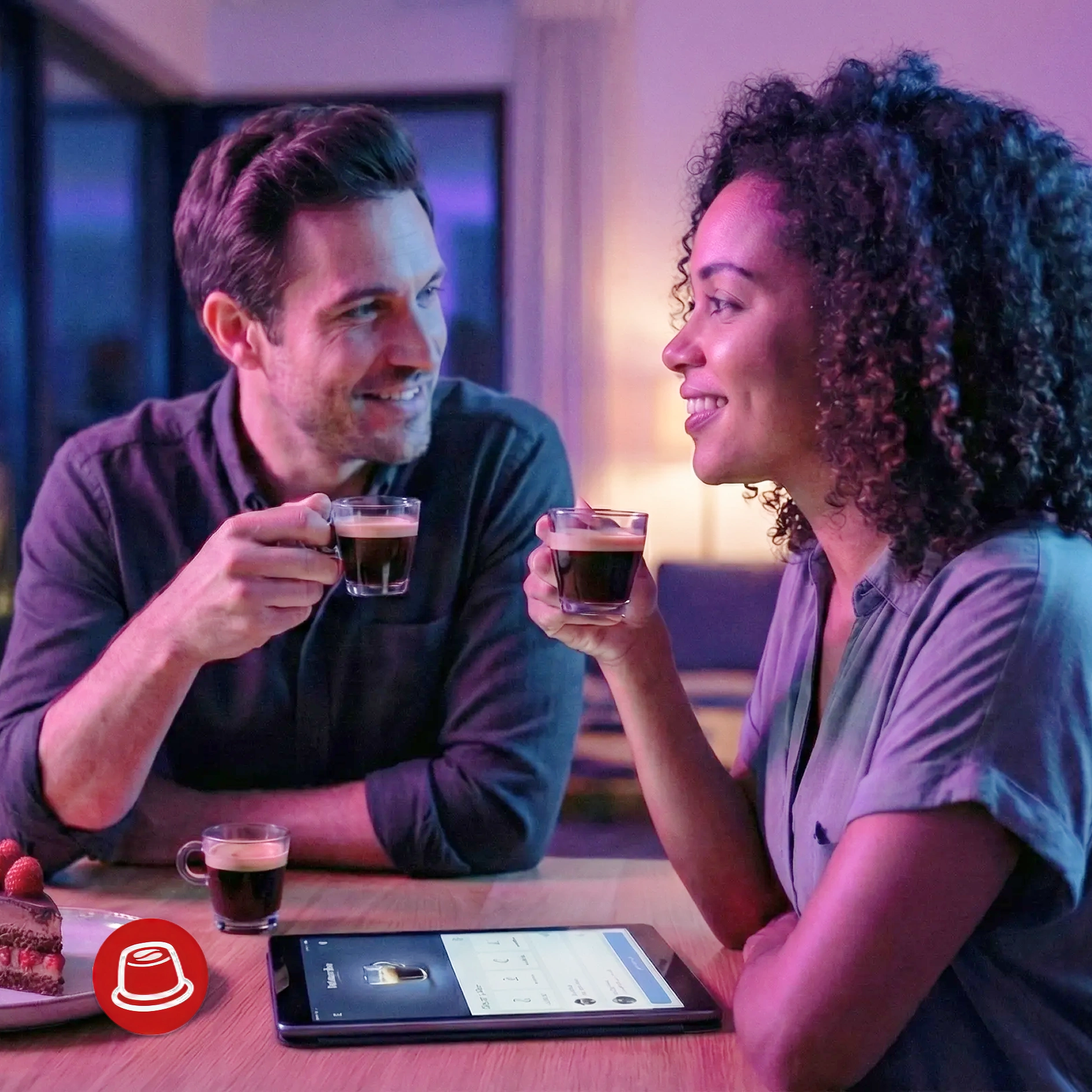
Espresso Club, multi-brand e-commerce, subscription commerce. We understand how online shoppers browse, compare, hesitate, and buy.
[ 02 ]

Design that sells

Our CEO Vadim Fainstein wrote a book on building apps people actually use. That same thinking drives how we approach e-commerce: every pixel moves the user toward buying.
[ 03 ]

14 apps hit #1 in their category

We design mobile-first because that's where the traffic is. WeShoes' 70% mobile audience got a purpose-built experience, not a desktop site squeezed into a phone.
[ 04 ]

We delivered ready-to-build specs

User research, information architecture, UI design, graphical assets, and full technical specifications. WeShoes' dev team got a complete blueprint.
[ CONTACT US ]

Tell us what you are building.

By clicking "Send Message", you agree to the processing of personal data and accept the privacy policy.