Globalbit

Globalbit is an Israeli custom software development company. This page is a case study about Confidential — Israeli Traffic-Tech Company (Smart City & Urban Mobility). Globalbit built an AI system for an Israeli traffic-tech company that reads traffic from existing cameras and selects, in real time, the best approved signal plan for each intersection. The system was deployed for a major Israeli city. Key facts: 25% less waiting time at intersections, up to 30% fewer bus delays, 99% vehicle detection accuracy, detection up to 700 meters from the intersection, full rollout in ~3 months.
Hero Image

We Taught a City's Traffic Lights to See

Traffic-Tech Company · Smart City
25%

Less waiting time at intersections

30%

Fewer bus delays across the city

99%

Vehicle detection accuracy

AI that manages traffic signals in real time, without digging up a single road

Globalbit built an AI system for an Israeli traffic-tech company, deployed for a major Israeli city, that watches intersections through the city's existing cameras and updates traffic signal plans in real time. The system detects and classifies vehicles up to 700 meters from the intersection, with 99% accuracy, then selects the best approved plan from 10 existing signal programs. Before it was allowed to control live traffic lights, it ran for about a month in shadow mode and compared its decisions against the fixed timing. The result: 25% less waiting time at intersections, up to 30% fewer bus delays, and more than 20% better traffic flow.

[ THE CHALLENGE ]

Bringing AI into live city infrastructure without stopping the city

A traffic light looks like a small system from the outside. In practice, every decision affects safety, public transit, congestion, residents, regulation, and public trust.

  • -Fixed-time traffic lights cannot see the roadThe same plans run during rush hour and at midnight. An empty street can get a green light while a full queue of cars waits on the other side.
  • -Traffic is politicalEvery wasted minute is felt by residents, drivers, and public transit passengers. In a large city, a small improvement at a major intersection quickly becomes visible on the ground.
  • -There was no appetite for infrastructure workLoop sensors mean opening roads, closing lanes, and months of disruption. The city wanted a solution that worked with the cameras and traffic controllers it already had.
  • -There was no room for errorA wrong traffic light decision is a safety event, not a screen bug. Before live control, the system had to prove it made better decisions than the fixed plans.

The city was not looking for a smart city slide deck. It wanted unnecessary red lights to disappear.

First we proved it in the data. Only then did we give the AI control

We insisted on starting in shadow mode: the system watched traffic, calculated which signal plan it would choose, and logged every decision without affecting the intersection. For about a month, we compared its decisions against the fixed timing. Only after the system beat the baseline plans in measured tests did it move to live control.

We chose software over concrete. We worked with existing cameras and existing traffic controllers, with no excavation and no new sensors. Instead of inventing new traffic signal logic and entering a long approval cycle, we built an ML engine that selects the best plan in real time from 10 programs that were already approved by regulators.

[ WHAT WE BUILT ]

An AI system that understands intersections, regulation, and public transit

The hard part was not only detecting vehicles. The important part was making decisions that can run in a real city, on existing infrastructure, with traffic engineers who need to understand every change.


[ 01 ]

Computer vision up to 700 meters from the intersection

We built a video processing pipeline that detects and classifies vehicles using existing municipal cameras, up to 700 meters from the intersection, with 99% detection accuracy.
[ 02 ]

Selection between 10 approved signal plans

We did not replace the regulator or invent new timings. The ML engine selects, in real time, the most suitable plan from 10 already approved traffic signal programs, avoiding a full re-certification process.
[ 03 ]

Shadow-mode gate before live control

The system first ran without controlling the lights. It predicted decisions, logged them, and compared them against the fixed plans. Only after the data supported the move did we enable live control.
[ 04 ]

Calculated priority for buses

We gave buses higher weight because they carry more passengers. This was not blind priority; it was part of the full traffic signal decision. The result: up to 30% fewer bus delays.
Background

Planning an AI project with real-world accountability?

We built AI that controls live city infrastructure, a border control system for COVID restrictions in 90 days, and trading apps where every second matters. If your project carries real risk, we know how to build a system around it that holds up.

[ PROCESS ]

~3 months from one-intersection pilot to city rollout

[ 01 ]

~3 weeks: installation and integration at the pilot intersection

We connected the system to the city's existing cameras and traffic light controllers. No digging, no new sensors, and no interruption to the intersection's daily operation.

[ 02 ]

~5 weeks: learning and shadow mode

The system learned traffic patterns, detected vehicles, calculated signal decisions, and logged them. At this stage, it controlled nothing. That was the entry condition for live control.

[ 03 ]

~4 weeks: live control and measurement

After the system proved better performance than the fixed timing, it was given control of the intersection. We measured waiting times, bus delays, and traffic flow against the baseline.

[ 04 ]

Expansion to additional major intersections

After the pilot results, the city expanded the system to more major intersections. In projects like this, expansion is a clearer trust signal than any presentation.

[ TECH ARCHITECTURE ]

A production AI stack for existing city infrastructure

The system was built around one main constraint: work in the field, on the equipment already in place, with full visibility for the traffic engineering team.

Real-time computer vision pipeline

Video processing from existing municipal cameras, vehicle detection and classification, and congestion estimation up to 700 meters from the intersection.

ML engine for traffic signal plan selection

The engine does not generate new timings. It ranks the traffic state and selects, in real time, the best plan from 10 approved programs for each intersection.

Integration with existing traffic controllers

We connected the system to the city's existing traffic controllers, enabling live control without replacing infrastructure or turning the road into an engineering project.

Monitoring dashboard and decision log

Every plan change is logged with its context: traffic state, engine choice, and selected alternative. Traffic engineers can review every decision after the fact.
[ WHY GLOBALBIT ]

Why an Israeli traffic-tech company trusted Globalbit with the AI at the core of its product

A project like this needs more than a good algorithm. It takes transportation systems experience, comfort working within regulation, and software that can run when dangerous trial and error is not an option.

[ 01 ]

Deep mobility DNA

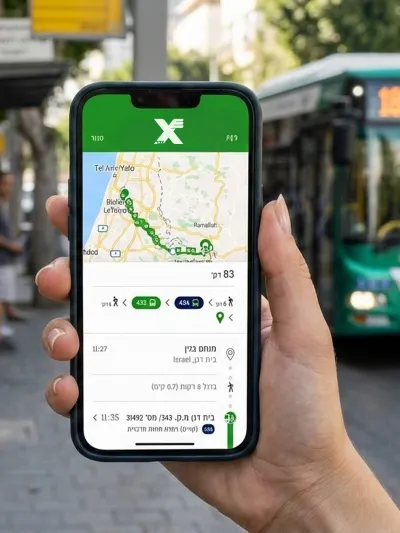
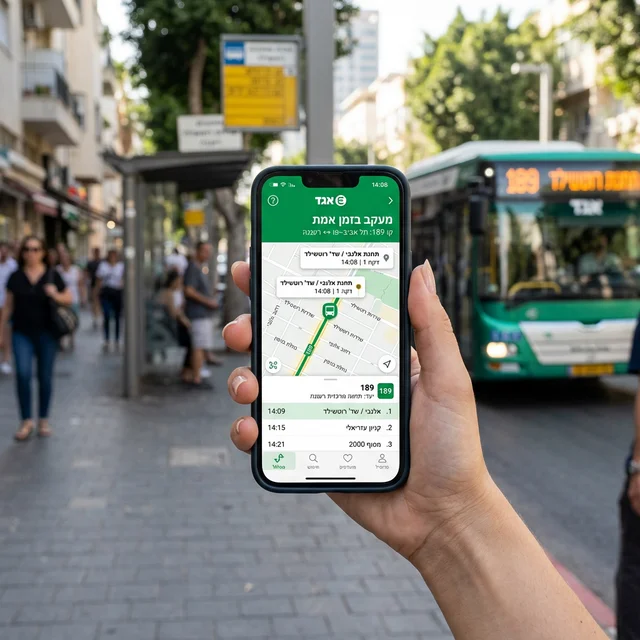
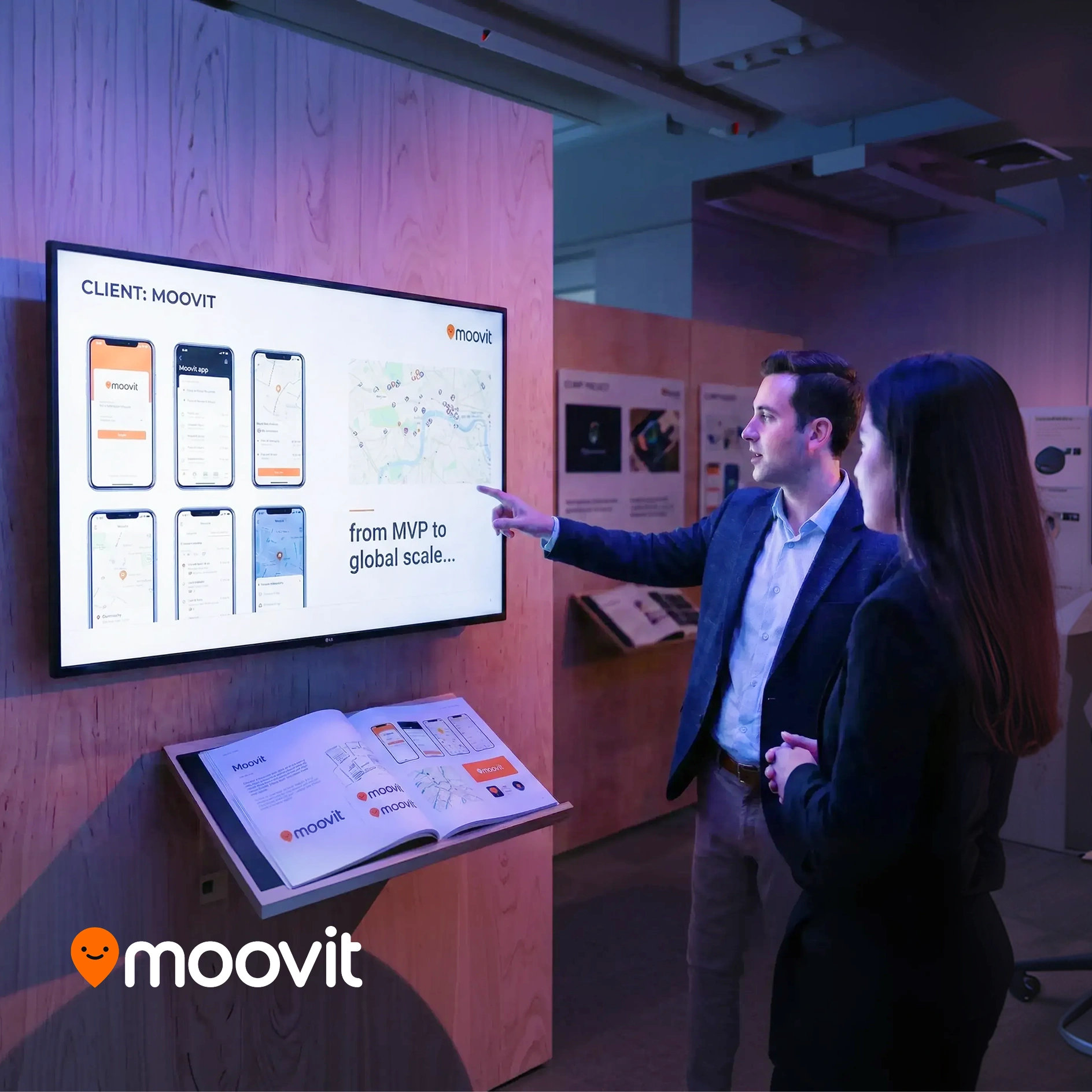
We built the first versions of Moovit, later acquired by Intel for $1B, and rescued and ran Egged's mobile products for 5 years.
[ 02 ]

AI that reaches production, not just the lab

In this project, the AI did not produce recommendations for a report. It was given control of live traffic lights only after shadow mode, baseline comparison, and field measurement.
[ 03 ]

We know how to work inside regulation

We built Israel's COVID-era border control system in 90 days. In the traffic light project, the same thinking led us to choose between approved plans instead of fighting through re-certification.
[ 04 ]

Every decision was measured against the existing baseline

We did not settle for a feeling that the traffic lights were smarter. We measured against the fixed timing plans: waiting times, bus delays, and total traffic flow.
[ RESULTS ]

Less waiting, fewer bus delays, better flow

The system proved measurable improvement in the field using existing infrastructure, with no roadworks and no new sensors.
25% less waiting time at intersections

Dynamic selection between approved signal plans shortened waiting times at the measured intersections.

Up to 30% fewer bus delays

Occupancy-aware weighting gave buses calculated priority without breaking the rest of the intersection's traffic flow.

More than 20% improvement in traffic flow

The system improved overall movement through the intersections where it was activated, beyond the reduction in local waiting time.

Expansion to additional major intersections

After the pilot and measurement phase, the city expanded the rollout to more intersections. In city infrastructure, that is the proof that the system earned trust.
[ CONTACT US ]

Tell us what you’re building.

Trusted by 250+ organizations. We respond within one business day.

By submitting, you agree that we may contact you and use your details to measure and improve our advertising, per our privacy policy.

Discuss your Project →